Colic · Complementary approaches
Baby Reflexology for Colic: Our Honest Experience and What the Research Says
I hoped reflexology might solve everything. What it actually gave us was quieter—and still meaningful.
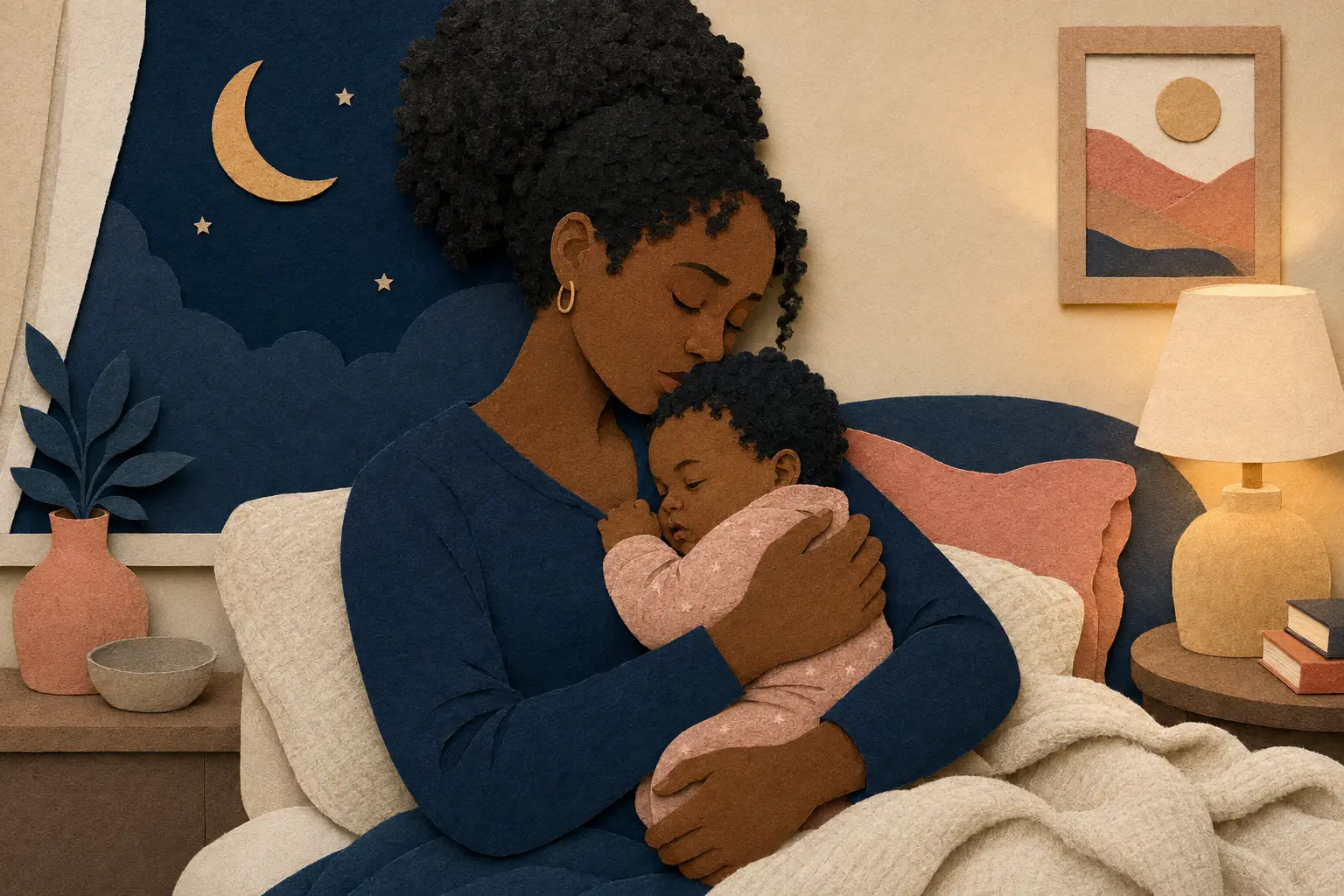
I was so excited for our first baby reflexology appointment.
By that point, we had been living through intense crying, digestive discomfort, broken sleep and what felt like an endless search for answers. We had already tried so much. When I discovered baby reflexology for colic, I remember thinking:
Maybe this is it. Maybe this will finally be the thing that helps my baby.
Looking back, I can see how much hope I placed on that appointment. But when you are exhausted and desperately trying to help a baby who seems uncomfortable, every new possibility can feel enormous.
Why We Tried Baby Reflexology for Colic
I had been searching everywhere for things that might help: doctors, hospitals, feeding changes, anti-colic products, massage, research papers, Google and, like many exhausted parents, social media.
I came across information about baby reflexology on TikTok and became fascinated by it. Reflexology practitioners use gentle pressure and massage on specific areas of the feet. Within reflexology theory, different areas of the feet are associated with different areas or systems of the body.
My baby seemed to have so much digestive discomfort. She struggled with wind, straining and settling. I desperately wanted another tool that might help, so I found a baby reflexologist who was willing to travel from Lichfield to Birmingham to see us.
I Thought the Appointment Might Fix Everything
When the reflexologist arrived, I was genuinely excited. She taught me about reflexology and showed me different techniques. I wanted to understand, learn and, most importantly, help my baby feel better.
But my baby did not seem completely comfortable with every part of the session. I particularly remember her reaction when the practitioner was touching around her forehead. Something inside me did not feel completely settled.
That does not mean the practitioner had done something wrong. It was simply my instinct as her mum. By then, I knew my baby’s movements, noises and expressions incredibly well, and I felt she was not completely comfortable.
I remember thinking: What if this does not work either? That thought was devastating because I had approached the appointment desperately. I had built it up as something that might finally solve our problems—and it did not, at least not in the way I imagined.
What Happened Afterwards Surprised Me
I did not find another baby reflexologist. Instead, I kept learning. I watched demonstrations of gentle baby reflexology and foot massage and practised some of what I had learned at home for as long as my baby appeared comfortable.
Reflexology stopped being: Someone is going to fix my baby.
It became: Here is another gentle thing I can try when she seems uncomfortable.
That shift mattered. One of the hardest parts of having a baby who cries intensely is feeling completely powerless. This gave me something calm and gentle I could do.
The Gentle Foot Massage I Used When She Was Straining
Digestive discomfort was a major issue for us. There were times when my baby would strain, make uncomfortable noises and seem to be trying to pass wind or open her bowels.
During those moments, I would gently massage her feet. I worked from the big toe towards the smaller toes and around the heel, gently massaged each toe, and usually repeated the movements five to ten times depending on how she responded. I also made small circular movements with my finger around the centre of the sole.
I began noticing that, on some occasions, she passed wind afterwards and seemed more comfortable. For me, that felt significant. When you have spent so long watching your baby struggle, even a small moment of apparent relief can feel enormous.
This is a description of what I personally did, not a treatment instruction. Babies differ, and persistent straining, constipation, pain or feeding concerns should be discussed with a healthcare professional.
Can Baby Reflexology Help With Wind or Constipation?
This is where I need to separate my experience from medical evidence.
I can honestly say that there were occasions when my baby passed wind after I massaged her feet and appeared more comfortable. I cannot say that pressing a particular reflex point has been scientifically shown to cause a baby to pass wind or treat constipation.
Research into reflexology in children remains limited. A systematic review of paediatric reflexology studies found some positive results but concluded that the evidence was too varied and limited to generalise. It did not find a positive effect for constipation.
What happened in our home was an observation, not proof that the same thing will happen for another baby.
Does Baby Reflexology Help Colic?
There has been some early research specifically investigating foot reflexology in babies diagnosed with infantile colic.
A small 2018 study involving 64 infants reported lower Infant Colic Scale scores after a reflexology intervention. A later single-blind, randomised, placebo-controlled trial recruited 45 babies with infantile colic; 40 completed it. The researchers reported shorter crying duration and lower Infant Colic Scale scores in the reflexology group than in the placebo-reflexology group.
Those findings are interesting, but they do not establish reflexology as a proven treatment for infant colic. The trials were small and the wider evidence base remains limited. The paediatric systematic review also highlighted differences between studies, limited standardisation and risk of bias.
More recent research into touch-based approaches found that parents reported improvements in crying and sleep after treatments including reflexology, but the authors did not find statistically significant differences between the treatment groups and conventional care.
There is some interesting early research into reflexology for infant colic, but there is not currently enough high-quality evidence to call it a proven treatment.
What About Reflexology Maps of the Feet?
When I started learning about reflexology, I found diagrams showing areas of the feet corresponding with the digestive system, head, spine and different organs.
Reflexology practitioners use these maps as part of their theory and practice. But I do not want to present reflexology theory as established anatomy. There is not strong enough evidence to tell parents that pressing one part of a baby’s foot directly stimulates or controls a particular internal organ.
Throughout The 1AM Club, I want to keep a clear distinction between:
What we experienced.
What a therapy proposes.
What research has actually established.
Parents deserve to know the difference.
The Biggest Benefit Was Not What I Expected
The biggest benefit for me was connection.
When you have a baby who cries for hours, your relationship can become centred around solving problems: feeding, winding, rocking, walking, changing, settling, trying to understand why they are awake again, and starting over.
You love your baby more than anything, but you are constantly in problem-solving mode.
There were moments when sitting down, holding those tiny feet and gently massaging them felt completely different. I was not searching Google, pacing the house or desperately asking somebody what was wrong. I was simply sitting with my baby, touching her gently, watching her, learning her and connecting with her.
After everything we had been through, I needed that. I think she did too.
Did Baby Reflexology Help With Sleep?
Sleep was another enormous issue for us. I personally felt that calming touch and some of the techniques I had learned could help with settling at times.
But I am deliberately not going to tell you that baby reflexology makes babies sleep. I do not have evidence to support a claim that strong, and our eventual improvement in sleep was much bigger than reflexology.
We researched, tried different approaches and sought professional help. Eventually, we worked with a sleep consultant, and that became one of the biggest turning points for our family.
I do not believe reflexology solved our sleep problems. I think it was one of several calming things we incorporated during a very difficult period, and personally I valued it.
Baby Reflexology Was Not Our Miracle Cure
This is probably the most important part of this article: baby reflexology did not cure everything.
When you are barely sleeping and your baby seems constantly uncomfortable, it is easy to put all your hope into the next appointment, bottle, supplement, practitioner or recommendation online.
I know that feeling. That is why I do not want The 1AM Club to become another website promising exhausted parents miracle solutions.
Our journey was not like that. We sought medical help, researched, experimented carefully, learned our baby, changed things that were not working and found small things that offered moments of relief. Eventually, professional sleep support made an enormous difference.
Baby reflexology became one part of that much bigger journey.
Is Baby Reflexology Safe?
If you are considering baby reflexology, do not use this article as a substitute for professional advice. Babies are small, developing and sometimes medically vulnerable.
Choose a practitioner with specific training and experience working with babies. Ask about their qualifications, experience and exactly what they intend to do. Watch how your baby responds and ask the practitioner to stop if anything appears uncomfortable.
Complementary therapies should never delay appropriate medical assessment. The NHS advises contacting your GP or NHS 111 if your baby is crying constantly and cannot be consoled or distracted, if the cry does not sound normal, or if your baby shows signs of illness such as a high temperature or lack of interest in feeding.
Trust your instincts. You know your baby’s usual behaviour better than anybody else.
Would I Try Baby Reflexology Again?
Personally, yes—but I would approach it differently.
I would not expect the practitioner to solve everything. I would see it as a complementary practice to explore alongside appropriate healthcare. I would ask more questions, pay close attention to my baby’s reactions and stop anything that did not feel right for her.
I would also remember that “natural” or “complementary” does not automatically mean proven, appropriate or risk-free.
Something does not need to cure everything to have value. For me, reflexology offered another way of interacting with my daughter, something gentle to do when she seemed uncomfortable and moments of connection during a period dominated by crying.
What I Wish I Had Known Before Trying It
I wish I had gone into that first appointment thinking: Let’s see whether this gives us another useful tool.
Instead of: Please let this save us.
There is a huge difference. But I do not regret exploring it. I learned new ways of using gentle touch with my baby, observed times when she seemed more comfortable, felt less helpless and found another way to connect with her.
A Letter to the Parent Searching for the Next Answer
If you found this article because you are desperately searching for something that might help your baby, I understand that search.
I have been the mum opening another tab, watching another video, reading another paper and booking another appointment, thinking: Maybe this will finally be the thing.
You do not have to place all your hope in one solution. Your baby’s story may not have one answer. Ours did not.
If you are interested in baby reflexology, learn about it. Ask questions. Look at the evidence. Find appropriately trained professionals. Watch your baby, and keep medical care involved when you have concerns.
Baby reflexology was not the miracle cure I imagined. Instead, it gave me something quieter: a tool, moments of calm, a little less helplessness and another way of connecting with my baby.
Sometimes, when you are parenting in survival mode, even a small amount of relief can feel enormous.
2018 study: Effect of Reflexology on Infantile Colic ↗
2021 randomised placebo-controlled trial ↗
Isabella Arday is a registered nurse, mum and founder of The 1AM Club. She shares her family’s experience of colic, digestive discomfort and severe sleep deprivation alongside carefully signposted research and health information.
A little clarity
Questions parents often ask
Does baby reflexology help colic?+
Some small studies reported reduced crying or colic scores, but the evidence remains limited. Baby reflexology has not been established as a proven treatment for infantile colic.
Can baby reflexology help with wind?+
Some parents, including Isabella, observe that their baby passes wind after gentle foot massage. This does not prove that stimulating a particular point causes a baby to pass wind.
Can baby reflexology help constipation?+
Research has not established reflexology as an effective treatment for constipation in children. Speak to a healthcare professional about persistent constipation, straining or difficulty passing stools.
Where are the colic reflexology points on a baby’s feet?+
Reflexology maps are part of reflexology theory, not established medical anatomy. Seek guidance from an appropriately trained infant practitioner rather than relying only on social-media diagrams.
Should I try reflexology instead of seeing my GP?+
No. Complementary approaches should not replace or delay medical assessment. Contact your health visitor, GP or NHS 111 if you are worried about your baby’s crying or health.